

Categories
Local Market InsightsPublished November 4, 2026
Massachusetts Election Results 2026: What Does This Mean for Homeowners and the Real Estate Market?

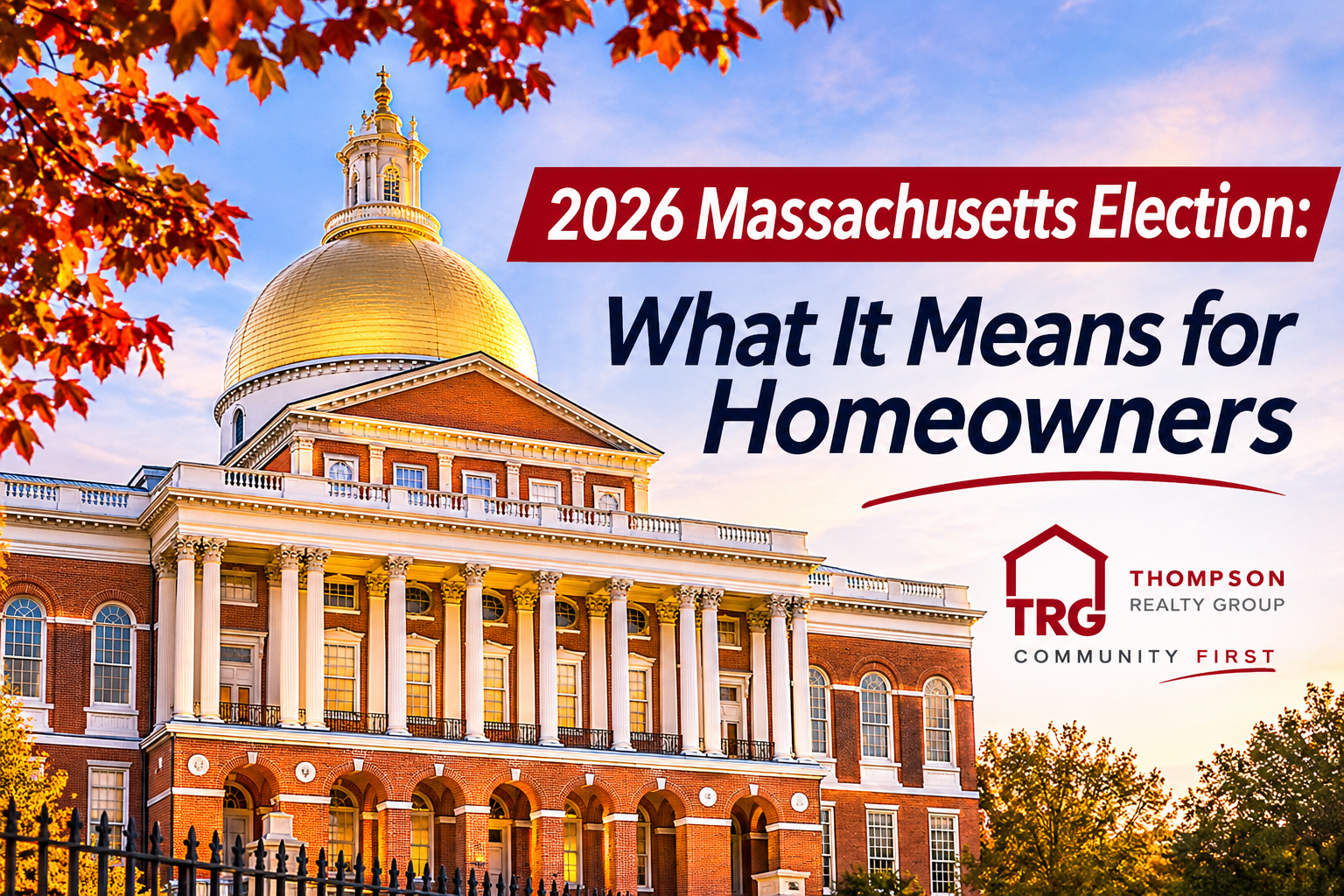
The votes are in, and Massachusetts has made its decision.
Governor Maura Healey has won reelection, Democrats have retained control of the governor's office, and voters have weighed in on several important ballot questions.
But beyond the political headlines, there's a much more important question for Massachusetts homeowners:
What does any of this actually mean for your home's value, property taxes, mortgage rates, and the real estate market heading into 2027?
It's a fair question, especially at a time when housing affordability remains a challenge, inventory is increasing in many communities, and buyers and sellers are adjusting to a changing market.
Let's separate the political noise from what actually matters to homeowners in Attleboro, North Attleboro, and surrounding Massachusetts communities.
1. Democrats Win: What Does That Mean for Massachusetts Housing?
Democratic Governor Maura Healey has won a second term, defeating Republican challenger Mike Minogue.
That means Massachusetts will continue under the current administration's leadership, with housing affordability, economic development, and the cost of living remaining important policy issues.
But here's something homeowners should understand:
An election victory doesn't automatically translate into higher home values, lower mortgage rates, or a stronger housing market.
Housing policy takes time to implement, and even well-intentioned initiatives don't always produce immediate results.
Massachusetts continues to face a housing shortage in many communities, particularly when it comes to attainable starter homes.
The challenge is finding ways to increase housing availability while balancing infrastructure, community needs, and the cost of construction.
For homeowners, the questions worth watching include:
- Will the state encourage additional housing development?
- Will new programs make homeownership more attainable?
- How will municipalities respond to pressure for additional housing?
- Can Massachusetts meaningfully reduce the cost of building new homes?
Those questions matter far more to the real estate market than which political party is celebrating on election night.
2. Question 7: A Potentially Significant Change for Massachusetts Homeowners
One of the most important ballot questions for the real estate industry this year is Question 7, which addresses minimum lot sizes for single-family homes.
Under the proposal, qualifying single-family homes could be constructed on residentially zoned lots with at least:
- 5,000 square feet of land.
- 50 feet of road frontage.
- Access to public water and sewer services.
Cities and towns would retain authority to reasonably regulate certain building characteristics, including setbacks, height, and other requirements.
As of Wednesday morning, November 4, Question 7 remained too close to call, with unofficial results still being counted.
Why does this matter?
Because minimum lot-size requirements can directly affect the availability of land for new housing.
If the measure passes, some properties that currently cannot accommodate additional single-family homes under local zoning requirements could potentially qualify for development.
For example, a homeowner with a larger parcel of land might want to explore whether a subdivision could become possible.
However, that would not mean every qualifying-looking property could automatically be divided or developed. Legal access, infrastructure, dimensional requirements, and other applicable regulations would still need to be evaluated.
Supporters believe reducing minimum lot sizes could encourage construction of smaller, more attainable homes.
Opponents have raised concerns about municipal control, infrastructure capacity, and the effects of additional development on established neighborhoods.
For homeowners in Attleboro and North Attleboro, this is worth watching closely.
My perspective: Increasing housing supply is important, but development also needs to make sense for the communities where it occurs. More housing alone doesn't guarantee affordability, especially when land, labor, materials, and financing remain expensive.
3. Will Property Taxes Increase After the Election?
Property taxes are already a major concern for Massachusetts homeowners.
But it's important to understand that a statewide election does not automatically change your local property tax bill.
In Massachusetts, property taxes are primarily determined at the municipal level, based on assessed values, tax rates, local budgets, and applicable state laws.
That means decisions made by local officials in Attleboro and North Attleboro will continue to play a significant role in what homeowners pay.
Could statewide housing policies eventually influence municipal finances? Absolutely.
Additional development may generate new tax revenue, but it can also increase demand for schools, public safety, roads, and other services.
Whether that translates into higher or lower costs for existing homeowners depends on the circumstances.
The bottom line on property taxes: Don't assume your taxes are going up or down simply because Democrats won.
Pay attention to local budgets, property assessments, and municipal tax decisions.
Those will have a much more direct impact on your bill.
4. What Happens to Mortgage Rates Now?
This is probably one of the biggest misconceptions surrounding elections and real estate.
People often assume that if one political party wins, mortgage rates will automatically move in a particular direction.
That's simply not how mortgage rates work.
Mortgage rates are influenced by several factors, including:
- Inflation and inflation expectations.
- U.S. Treasury yields.
- Federal Reserve monetary policy.
- Economic growth and employment conditions.
- Investor demand for mortgage-backed securities.
While government policies can influence the broader economy, the Massachusetts governor does not control mortgage interest rates.
And there's no guarantee that the results of this election will produce any particular movement in borrowing costs.
For buyers, the monthly payment remains one of the biggest factors determining affordability.
For sellers, mortgage rates can influence how many buyers are financially capable of purchasing their homes.
But trying to time the market around political developments can be risky.
My advice: Make financial decisions based on what you can afford today, not what you hope interest rates might do tomorrow.
5. What I'm Seeing in the Attleboro Real Estate Market
This is where the conversation becomes particularly important.
Throughout 2026, the Attleboro housing market has been changing.
We've experienced a substantial increase in available inventory compared with the extremely tight market of previous years.
Buyers have more choices, they're taking additional time to evaluate properties, and they're becoming increasingly selective about price and condition.
Meanwhile, some sellers are still pricing their homes as though we're operating in the same market we experienced during the pandemic.
We're not.
The biggest challenge facing many sellers today isn't a lack of marketing. It's unrealistic pricing.
A home can have professional photography, extensive online exposure, beautiful staging, and a strong marketing campaign.
But if buyers don't believe the asking price reflects the property's value compared with competing homes, they're going to move on.
That doesn't mean homes aren't selling.
It means pricing and presentation matter more than they did when buyers had almost no alternatives.
And none of that changes because of an election.
Whether Democrats or Republicans are in office, buyers will continue comparing properties, evaluating affordability, and making decisions based on their financial circumstances.
For sellers, the fundamentals remain the same:
Price better than your competition, and you give yourself an opportunity to outperform it. Price above what the market supports, and you risk sitting while competing homes sell.
That's the reality of today's market.
6. Could the Election Change Home Prices in 2027?
Potentially, over time. But I wouldn't make any dramatic predictions based on election results alone.
Home prices are influenced by a combination of factors, including housing supply, buyer demand, household incomes, financing costs, and local economic conditions.
Government policy can affect some of those factors, particularly housing construction and development.
But even if Massachusetts adopts policies encouraging additional housing, new homes don't appear overnight.
Land acquisition, permitting, infrastructure, financing, and construction all take time.
For homeowners in Attleboro and North Attleboro, the more immediate factors to monitor heading into 2027 are:
- How much inventory is available compared with last year.
- How long homes are taking to sell.
- Whether sellers are reducing asking prices.
- How closely final sale prices compare with asking prices.
- Whether mortgage rates improve or further challenge affordability.
These indicators will tell us considerably more about the direction of the local market than election-night celebrations.
7. Should You Buy, Sell, or Wait?
I wouldn't recommend making a major real estate decision simply because of who won an election.
If you're considering selling, the most important questions are what your home is worth today, how much competition you'll face, and whether selling makes sense for your personal circumstances.
If you're buying, focus on affordability, available properties, and whether the purchase supports your long-term goals.
And if you're staying put, keep an eye on property taxes, insurance costs, and potential zoning changes that could affect your property.
There will always be political uncertainty.
There will always be economic headlines.
And there will always be people predicting the next housing boom or housing crash.
But buying or selling a home is too important a decision to base on political speculation.
The Bottom Line: What Does This Election Really Mean for Homeowners?
Democrats won in Massachusetts. But the election doesn't change the fundamentals of real estate overnight.
Home prices aren't automatically going up. Mortgage rates aren't guaranteed to come down. And your property taxes aren't changing tomorrow simply because of the election results.
Massachusetts still has a housing affordability problem. Buyers are still struggling with monthly payments. Sellers are facing increased competition, and communities are still trying to balance housing development with infrastructure and municipal costs.
Question 7 could eventually influence residential development, depending on the final results and how any resulting law is implemented.
But for homeowners in Attleboro and North Attleboro, the biggest things to watch heading into 2027 remain housing inventory, mortgage rates, property taxes, and local market conditions.
My advice? Don't buy, sell, or wait because of who won an election. Make your decision based on your finances, your goals, and what's actually happening in your local market.
Politics can influence housing policy.
But supply, demand, and affordability will continue to drive the real estate market.
And that's what I'll continue paying attention to.
Have Questions About the Attleboro Real Estate Market?
Whether you're thinking about buying, selling, or simply curious about your home's current value, we're always happy to provide straightforward advice.
At Thompson Realty Group, we've helped more than 1,000 families navigate the real estate process, and our commitment remains the same: providing honest guidance, local expertise, and exceptional service.
Bill Thompson
Thompson Realty Group
Community First
Editor's note: This article reflects election information available on the morning of November 4, 2026. Unofficial ballot-question results remain subject to updates and certification.

Bill Thompson
Managing Director | Broker | Bill Thompson | Keller Williams Elite
or another way