
Categories
Attleboro Real EstatePublished October 9, 2026
Why Do Mortgage Rates Keep Climbing? A Plain-English Explanation

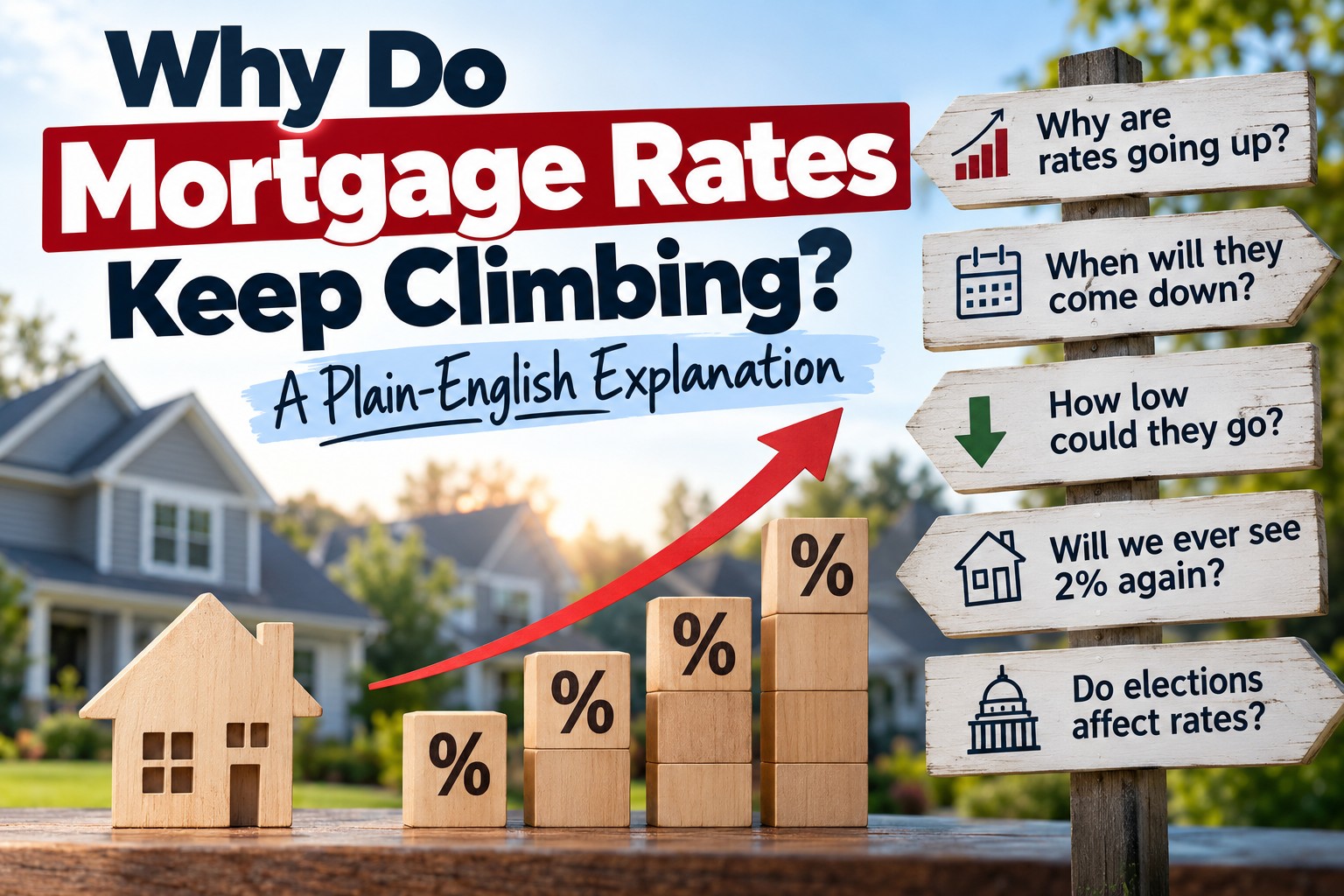
Just when it looked like mortgage rates might finally be heading in the right direction, they started climbing again.
So what happened?
I’ve been getting a lot of questions from buyers and sellers in Attleboro and North Attleboro lately:
Why are mortgage rates going back up? When will they come down? How low could they go? Will we ever see 2% or 3% rates again? And do elections have anything to do with it?
The mortgage world can make this sound incredibly complicated.
It really doesn’t have to be.
Here’s what’s happening in plain English.
Why Are Mortgage Rates Going Up?
First, one of the biggest misconceptions:
The Federal Reserve does not directly set mortgage rates.
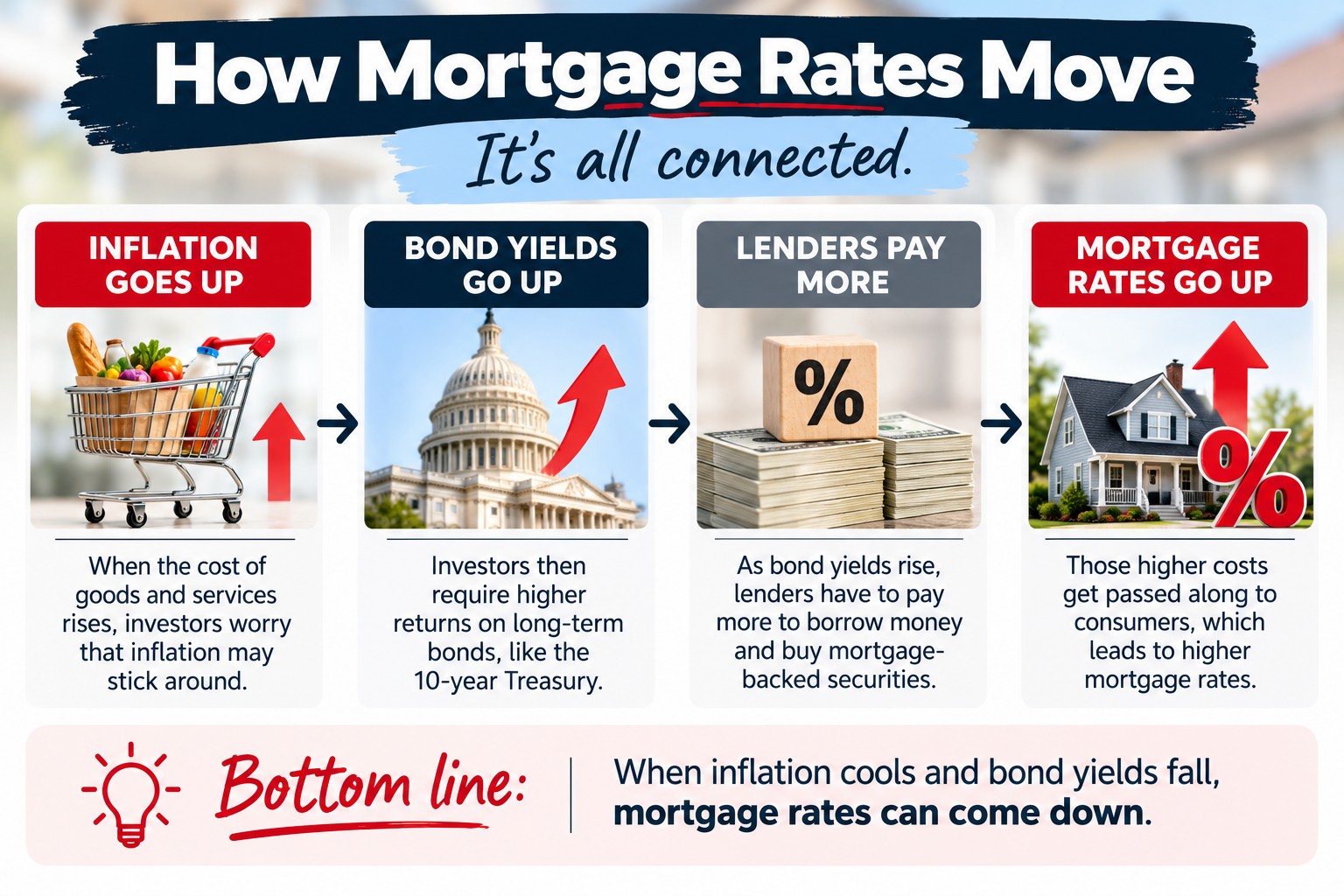
Mortgage rates are heavily influenced by the bond market, including longer-term Treasury yields and mortgage-backed securities.
Think of it this way:
Investors are lending money for a long period of time. If they’re worried that inflation will remain high, the economy will stay stronger than expected, or interest rates will remain elevated, they want a higher return for taking that risk.
When those longer-term yields rise, mortgage rates generally rise with them.
That’s why you can hear that the Federal Reserve changed its short-term interest rate and then wonder why mortgage rates didn’t follow.
They’re related but they’re not the same thing.
Why Are Rates Climbing Right Now?
A big part of it comes down to inflation and uncertainty about what happens next.
Financial markets are constantly reacting to new information about:
- Inflation
- Employment and wages
- Consumer spending
- Economic growth
- Federal Reserve policy
- Government borrowing
- Treasury yields
If new economic data suggests inflation could remain stubborn or the economy is stronger than expected, investors may assume interest rates will need to remain higher for longer.
Mortgage rates can move higher as a result.
And sometimes it happens quickly.
When Will Mortgage Rates Come Down?
This is probably the question I hear most.
The answer nobody loves:
We don’t know exactly.
Rates are more likely to meaningfully decline when inflation cools, economic conditions soften and investors become comfortable accepting lower returns on longer-term bonds.
But don't expect it to happen in a straight line.
We could see mortgage rates fall for several weeks, jump after an inflation report, fall again after weaker employment data and then move higher again.
Trying to predict the exact week or month when rates will finally drop is extremely difficult even for professional economists.
How Low Could Mortgage Rates Go?
Rates can absolutely come down from today's levels.
Could we eventually see rates back in the 6% range? Absolutely.
Could we eventually see rates in the 5s again? That's possible under the right economic conditions.
But nobody can responsibly promise when or whether a particular rate will happen.
That's why I wouldn't make a major buying or selling decision based entirely on someone's mortgage-rate forecast.
Make the decision using today's numbers.
If rates eventually fall enough to make refinancing worthwhile, that's an opportunity you can evaluate later.
Will We Ever See 2% Mortgage Rates Again?
Never say never.
But I wouldn't wait for them.
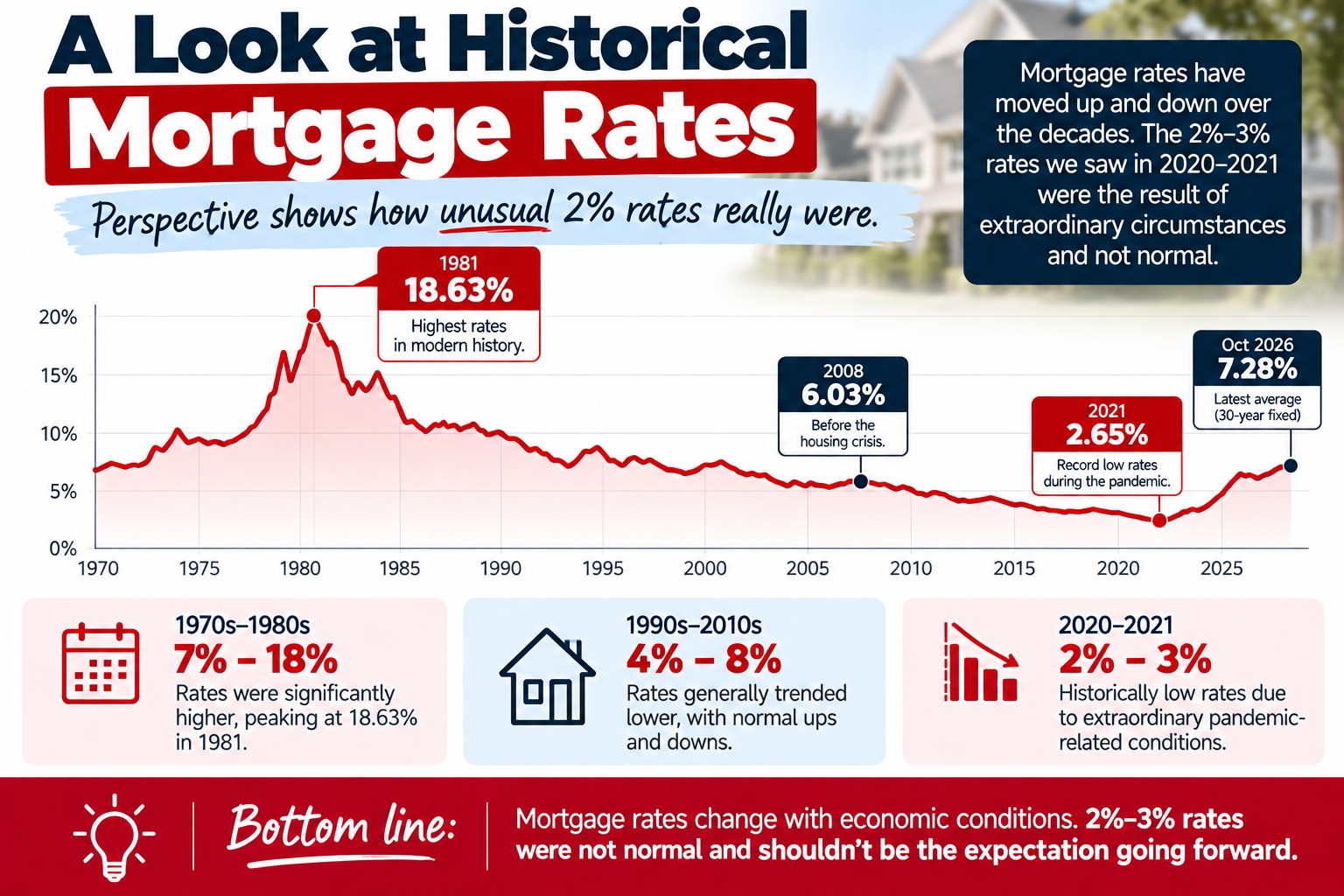
The mortgage rates we saw around 2020 and 2021 happened during an extraordinary period surrounding the pandemic, when the Federal Reserve took major steps to support the economy and financial markets.
Rates below 3% were not normal historical mortgage rates.
For perspective, Freddie Mac's mortgage-rate history goes back to 1971. Rates have been dramatically higher and lower during different economic periods, including exceeding 18% in the early 1980s.
That doesn't mean we're going anywhere near 18%.
It simply puts those 2% and 3% mortgages into perspective.
Could another extraordinary economic situation someday produce extremely low mortgage rates again?
Sure.
But I wouldn't build a real estate plan around waiting for it.
Do Mortgage Rates Drop During Elections or Midterm Elections?
I hear this one quite a bit, too.
There is no rule that mortgage rates fall because an election is approaching.
The President doesn't set mortgage rates. Congress doesn't set mortgage rates. And mortgage rates don't operate on an election calendar.
Elections can affect financial markets because investors may change their expectations about future taxes, government spending, deficits, regulations or economic policy.
But that's very different from saying:
“It's an election year, so mortgage rates are going down.”
I wouldn't make a buying or selling decision based on that assumption.
Should Buyers Wait for Mortgage Rates to Fall?
Maybe.
But I wouldn't make that decision based on the interest rate alone.
Higher rates hurt affordability, but they can also change the negotiating environment.
Depending on the property and situation, today's buyer may encounter:
- Less competition
- More negotiating room
- Seller-paid closing costs
- Repair credits
- Rate-buydown opportunities
- More flexibility with closing dates or other terms
I've seen firsthand how communication with the listing agent and understanding what a seller actually needs can create opportunities for buyers beyond simply offering more money.
So instead of asking:
“Is this the perfect mortgage rate?”
I'd ask:
“Does this particular house, at this particular price and monthly payment, make sense for me?”
That's a much more useful question.
What Do Higher Rates Mean for Sellers in Attleboro and North Attleboro?
Higher mortgage rates reduce purchasing power.
That's important for sellers to understand.
The same buyer may be able to comfortably afford less at a 7%+ mortgage rate than they could when rates were significantly lower.
That doesn't mean homes aren't selling.
They are.
But buyers tend to become more selective and more payment-conscious.
That means sellers need to pay even more attention to:
- Pricing
- Condition
- Presentation
- Competition
- Marketing
- Negotiation strategy
In a softer market, you can't simply pick the highest possible price, put a sign in the yard and hope someone eventually pays it.
Preparation, positioning and creating demand matter even more.
Should You Buy or Sell Now ... or Wait?
There isn't one answer that applies to everyone.
If you're buying, look at the house, price, monthly payment, available inventory and how long you expect to own it.
If you're selling, look at your home's current value, competition, likely buyer pool and what you're trying to accomplish after the sale.
Sometimes waiting makes sense.
Sometimes the current market creates an opportunity you wouldn't have in a hotter market.
The decision shouldn't come down to trying to perfectly predict one economic number.
The Bottom Line
Here's the simplest version:
Why are mortgage rates climbing?
Inflation, the bond market and expectations about where the economy and interest rates are heading.
When will mortgage rates come down?
Most likely when inflation cools and longer-term bond yields decline. Nobody knows exactly when.
How low could they go?
Rates can certainly fall from today's levels, but nobody can reliably promise a particular number.
Will we ever see 2% mortgage rates again?
Maybe someday, but those rates were the product of extraordinary circumstances. I wouldn't wait for them.
Will rates fall because of an election or the midterms?
Not necessarily. Mortgage rates respond to financial markets and economic expectations, not an election calendar.
The biggest takeaway?
Don't try to perfectly time the housing market. Understand the market you're actually in.
If you're considering buying or selling a home in Attleboro, North Attleboro or the surrounding communities, I'm always happy to look at the actual numbers with you.
No pressure. No wild predictions.
Just an honest conversation about what I'm seeing in the local market and whether making a move makes sense for you.

Bill Thompson
Managing Director | Broker | Bill Thompson | Keller Williams Elite
or another way